Creativity and the Machine
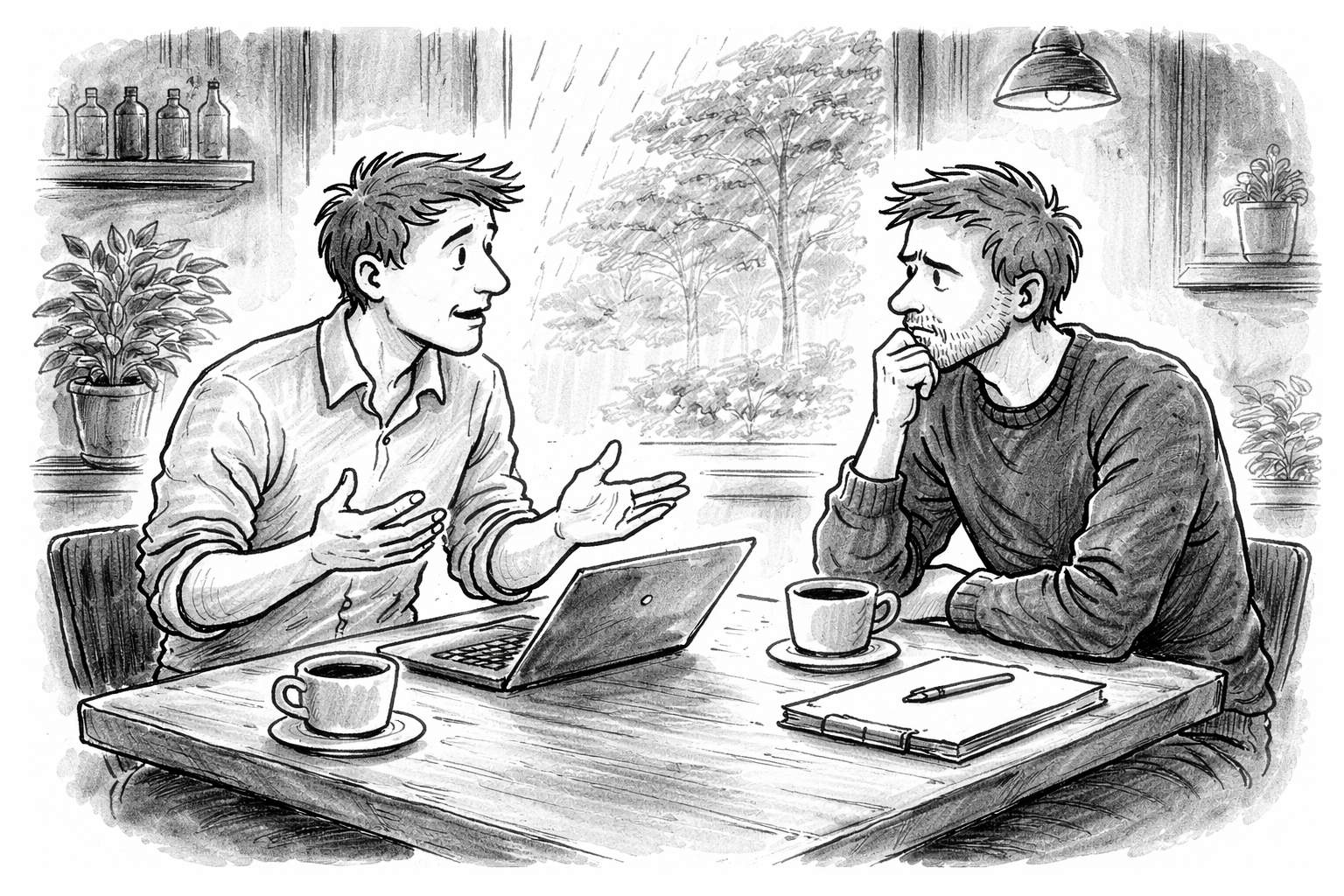
The café had filled up. A low murmur of conversations blended into a steady background hum. Someone dropped a spoon. No one reacted.
Ned:
-"My deeper worry is not that AI produces bad art. It is that it produces adequate art. The kind that is good enough to replace human effort in most commercial contexts. That shifts the center of gravity. Creativity stops being a process and becomes a commodity."
Paul:
-"I think that is exactly the pressure point, and it deserves more than a quick answer."
Paul folded his hands and spoke more slowly.
Paul: Creativity has always lived under that tension. Patronage, markets, deadlines. The difference now is speed and scale. AI can flood the zone with acceptable output. But acceptable output was never where cultural change came from. It came from people willing to risk being inefficient, strange or misunderstood. AI does not remove that possibility. It just makes the contrast sharper.
Ned: That sounds almost comforting.
Paul: It is not meant to be. It means that standing out will be harder and more necessary at the same time. For people who already struggle to justify their creative work, that is brutal.
Ned: Exactly. The bar moves, but the safety net does not.
Paul nodded.
Paul: And I do not think AI fixes that. If anything, it exposes how little we protect creative labor in the first place. We like art. We are less enthusiastic about artists.
A man at the counter argued quietly with the barista about oat milk. The barista sighed and remade the drink without comment.
Ned: You see, that is another thing. AI never argues. It never resists. Creativity requires resistance.
Paul: Resistance comes from constraints. AI is a new constraint. A strange one, but still a boundary you can push against.
Ned: Or lean on.
Paul: Or lean on, yes. That is the choice.
Ned stared at the table for a moment, tracing a scratch in the wood with his finger.
Ned: Let me try a longer thought, then. My fear is not that humans stop being creative. It is that they stop believing their creativity matters. When a machine can generate a painting, a melody or a paragraph instantly, human effort feels slow and unnecessary. Even if that feeling is wrong, it is powerful.
Paul: I agree with that more than you might expect.
Ned looked up.
Ned: You do?
Paul: Yes. Because meaning is not produced by comparison. The moment people measure their creative worth against machines, they have already lost the point. Creativity was never about efficiency. AI just makes that misunderstanding obvious.
Ned: Then why are you still optimistic?
Paul smiled, but only slightly.
Paul: Because misunderstandings tend to break eventually. When people drown in generated content, they start craving friction again. Imperfection. Voice. Context. Someone who meant something.
At the neighboring table, the little girl had started coloring outside the lines. Her mother noticed, hesitated, then said nothing.
Ned: Or they adapt and stop caring.
Paul: Possibly. But even that would be a human choice, not a technical one.
Ned: You keep separating humans and machines as if the line is clean.
Paul: It is not clean. But it is still there. AI does not want to be heard. People do.
They both sat back. The conversation had slowed. Not because there was nothing left to say, but because saying more would mostly repeat what had already been said in different shapes.
Ned: I think we agree that AI changes creativity.
Paul: Yes.
Ned: We agree it creates risks.
Paul: Definitely.
Ned: And that how it is used matters more than what it can do.
Paul: Absolutely.
Ned: Where we disagree is whether those risks are manageable.
Paul: And whether people will choose to manage them.
Ned exhaled.
Ned: I remain unconvinced.
Paul: I remain hopeful.
A silence settled between them, comfortable this time.
Ned: You know, if this conversation were written by an AI, it would probably end with some neat resolution.
Paul: Or a call to action.
Ned: Or a moral.
Paul glanced around the café.
Paul: Instead, it ends with two men who paid too much for coffee and changed exactly zero minds.
Ned: That might be the most human ending possible.
They stood up, leaving the cups behind. On the table lay a napkin with a few absent-minded doodles neither of them remembered making.